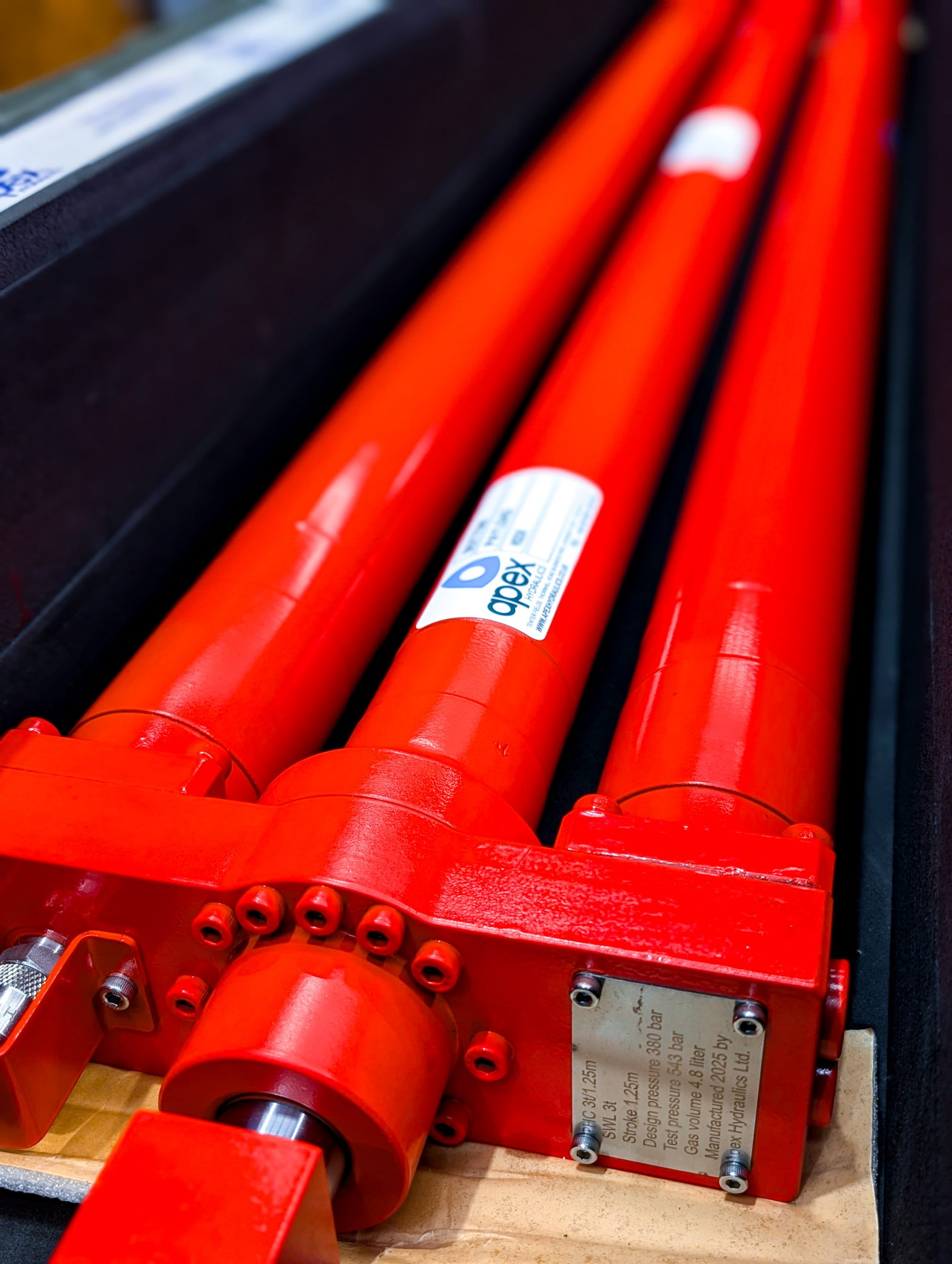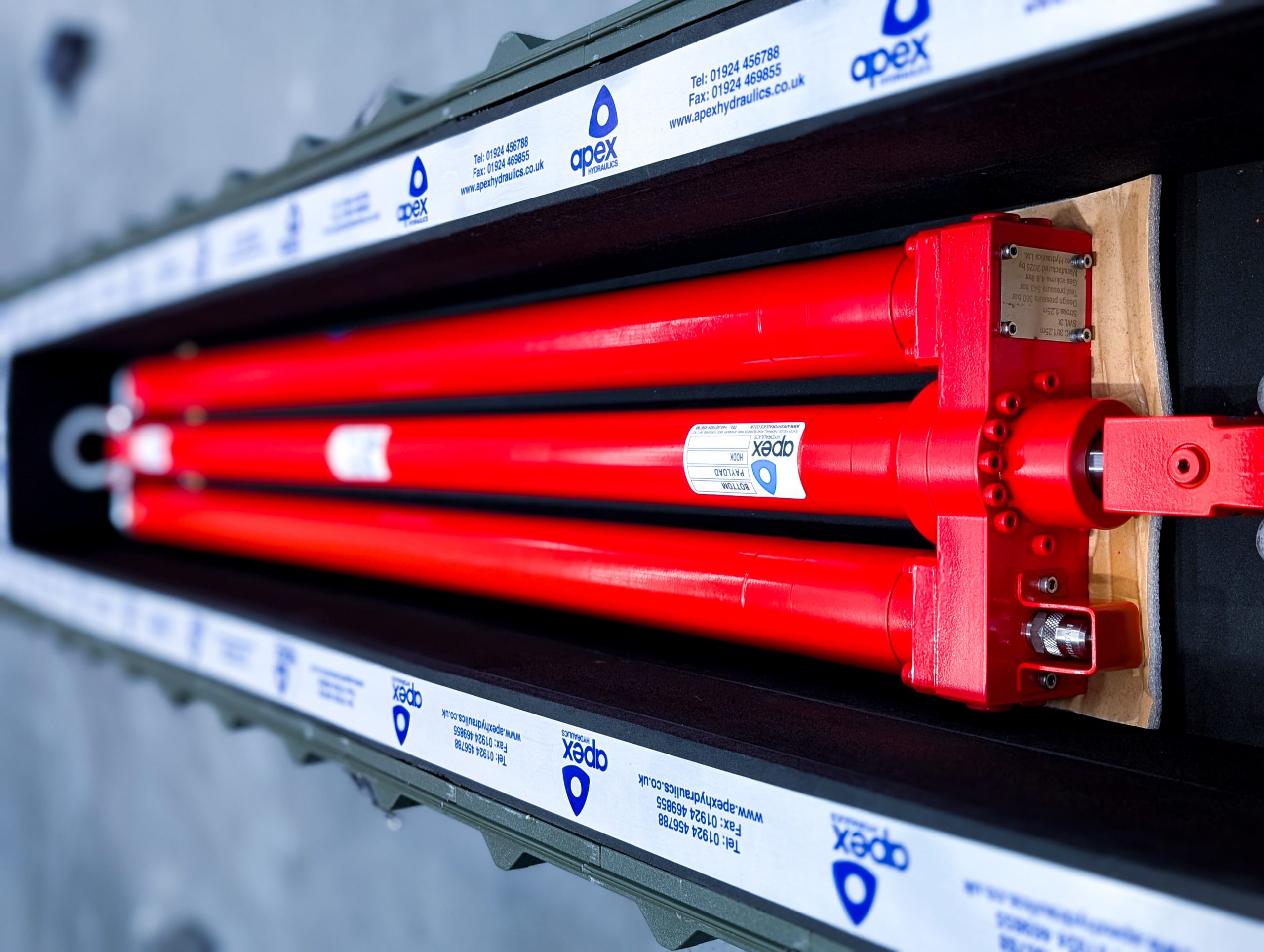
Apex Hydraulics was recently approached by a client needing a Passive Heave Compensator (PHC) for a tool to be used as a back-up, in the event of equipment failure.
The Client
The client operates Autonomous Underwater Vehicles (AUV’s). These are used several times a year, for a variety of tasks including exploring, collecting data and surveying. They are often deployed and retrieved using Launch And Recovery Systems (LARS).
When operations go as planned, there is no need for a separate PHC, as there is usually heave compensation integrated into the LARS. However, in the event of LARS failure, the vessel needs a backup option to retrieve the expensive AUV from the water. There is a crane on board the vessel, with a 3-tonne capacity. However, it does not have any form of heave compensation.
A Shock Load Problem
This created a problem for safe lifting. As the 2-tonne vehicle would be moving up and down in the sea, and the crane is attached to a vessel which is also moving up and down, there is a critical point at which the crane could be lifting while the AUV is dropping. This uncontrolled lift can induce a force that is way above the crane’s safe working load.
While the LARS would react to this movement and absorb any such shock force, the crane does not have any integrated safety system. The lack of any shock absorption could result in a stretched cable, or shock to the vessel or payload, which could have other consequences in terms of damage to equipment. In extreme cases, there could be catastrophic implications for the safety of crew members.
Because of this, it is important that the crane users have access to a failsafe that will deal with this potential shock load.
The Apex Solution
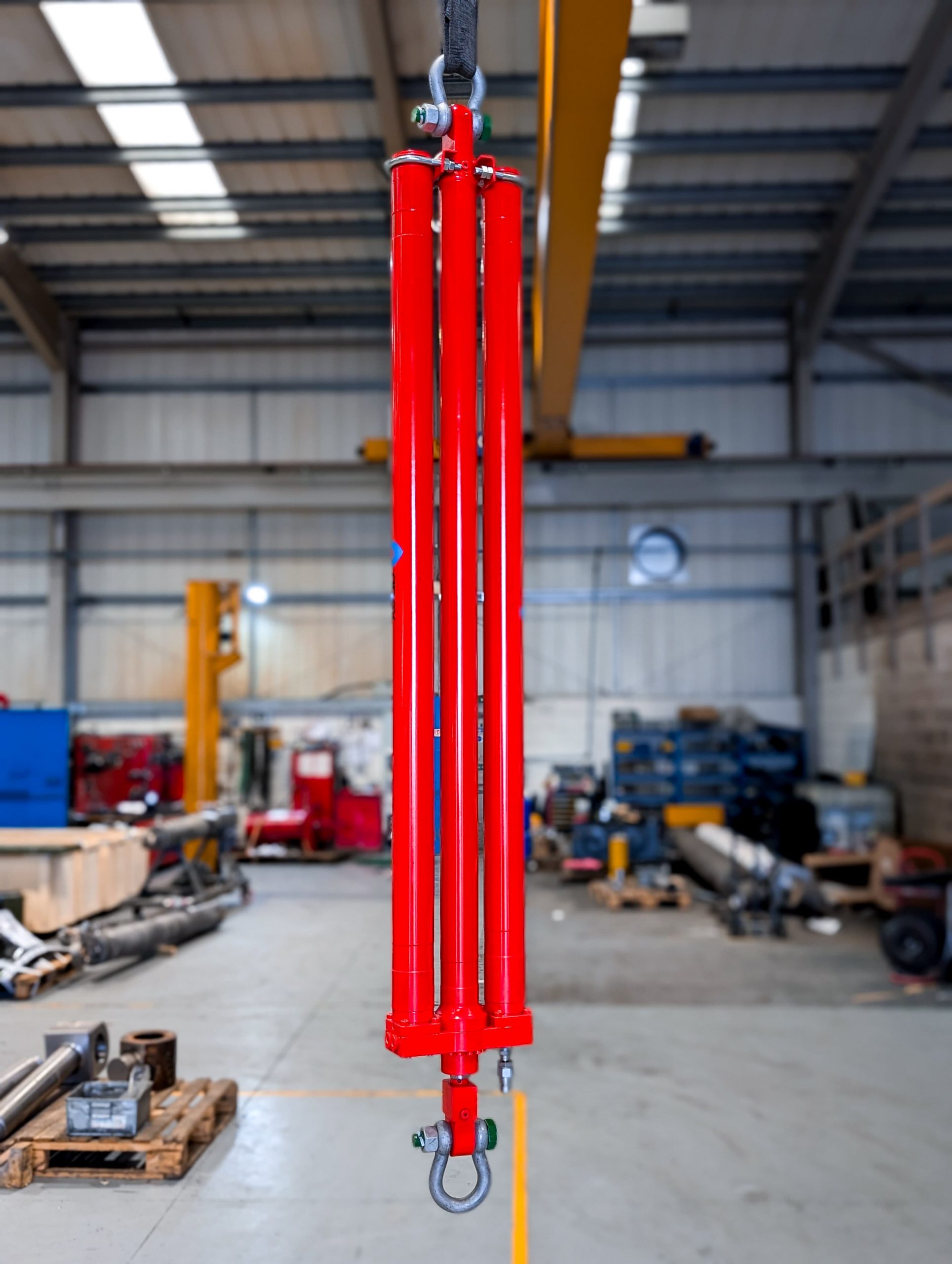
Apex have designed and built a passive heave compensator which can be attached between the crane and the payload, to mitigate the risk of overload during the transfer lift. It comes complete with a lifting shackle on each end, integrated accumulators and adjustable valves included.
The PHC is shot blasted and painted for offshore use, with chrome plated stainless steel rods, so will have extremely long durability, even in the tough offshore environment.
The accumulator pre-charge can be changed by the user to suit the payload. The equilibrium length can be adjusted to limit the overall length of the unit to suit the maximum crane height if required.
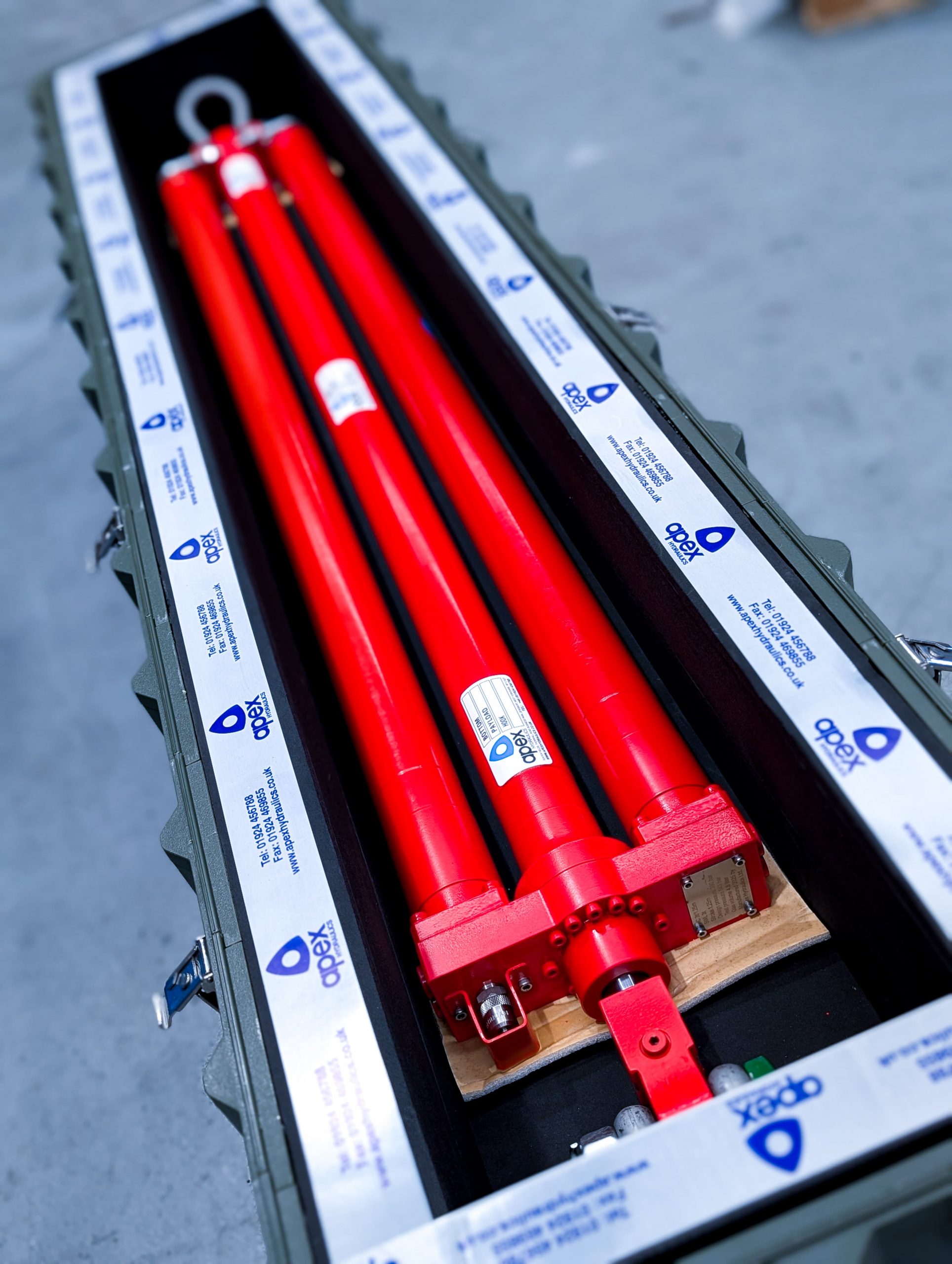
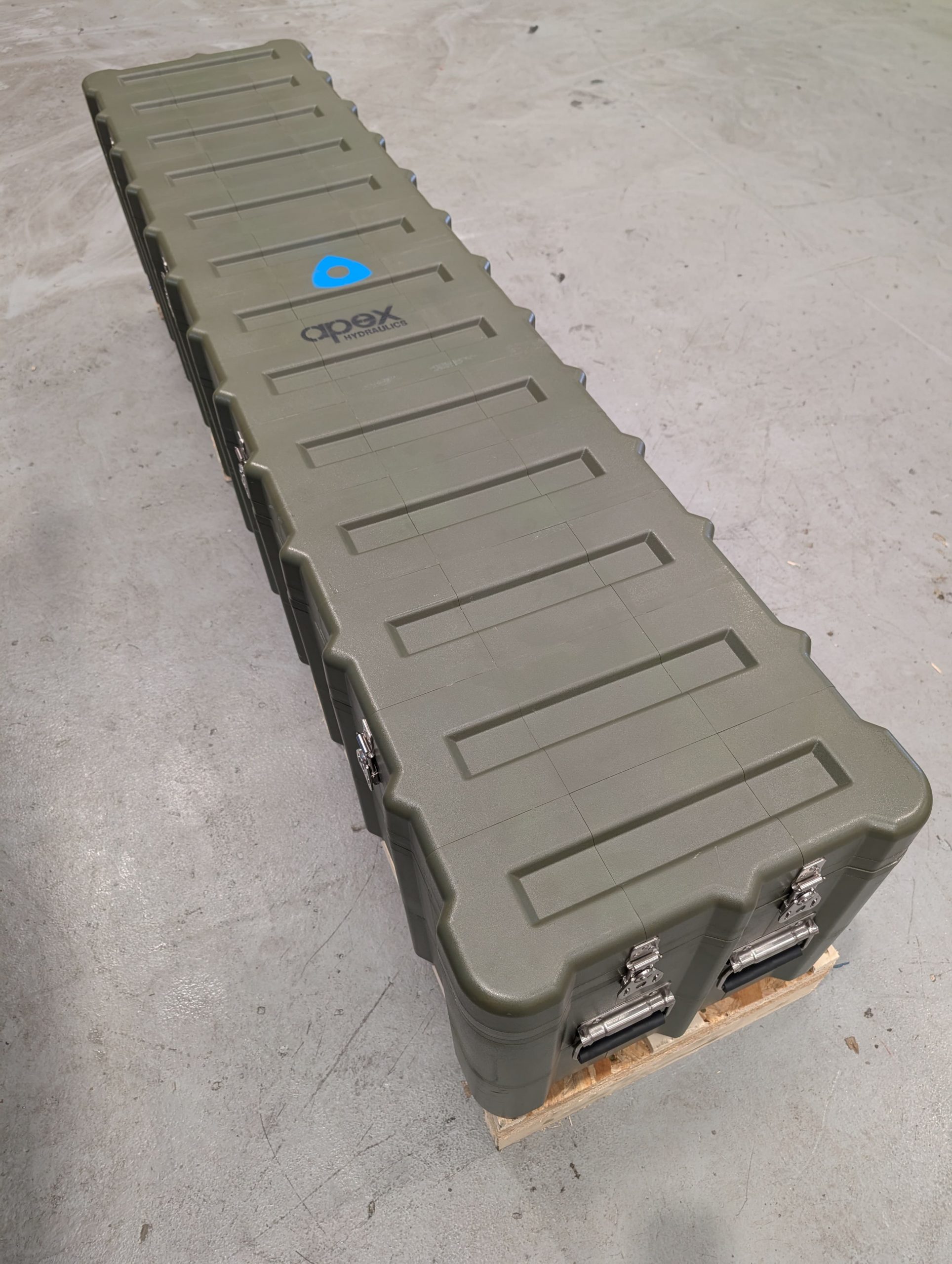
The PHC was supplied in a tough plastic storage case on wheels and can be stored on board the vessel to be utilised in the event of a LARS failure. The cylinder and shackles weigh approximately 200kg and can be attached to the crane in a matter of minutes in the event of the crew resorting to using the crane.
Apex Results
The PHC was delivered within ten weeks of the design’s approval, meaning that the client can continue offshore operations with the knowledge that the crane can be used as backup if needed.
Apex can provide passive heave compensators and offshore shock absorbers for any offshore lifting requirements. This can range from small PHCs as described above, to very large units, over 1000 times the size.
All Apex PHCs and shock absorbers come with a full certification package as standard and can include third party approvals where requested. Annual services and spare parts are all provided by Apex to suit the client’s requirements.

Related Products
The following products were utilised as part of this project. For more detailed information on these products, click on an image below…